
Three tones, one octave apart
Played to your better ear, just above your hearing threshold, half a second each.
 Formerly Tinnycalm
A closer look at HearHush
Personal sound is one part of Care. Explore how your listening profile shapes the audio, alongside a 12-week CBT programme and tools to follow your progress.
First programme week free. Complete Care: €99 for 12 weeks. No automatic Care renewal.

Your first 8 minutes
You do not need the perfect words or a clinical result. HearHush guides the comparison and saves where you finish.
Use headphones, find a quiet place, and set aside 5–10 unhurried minutes.
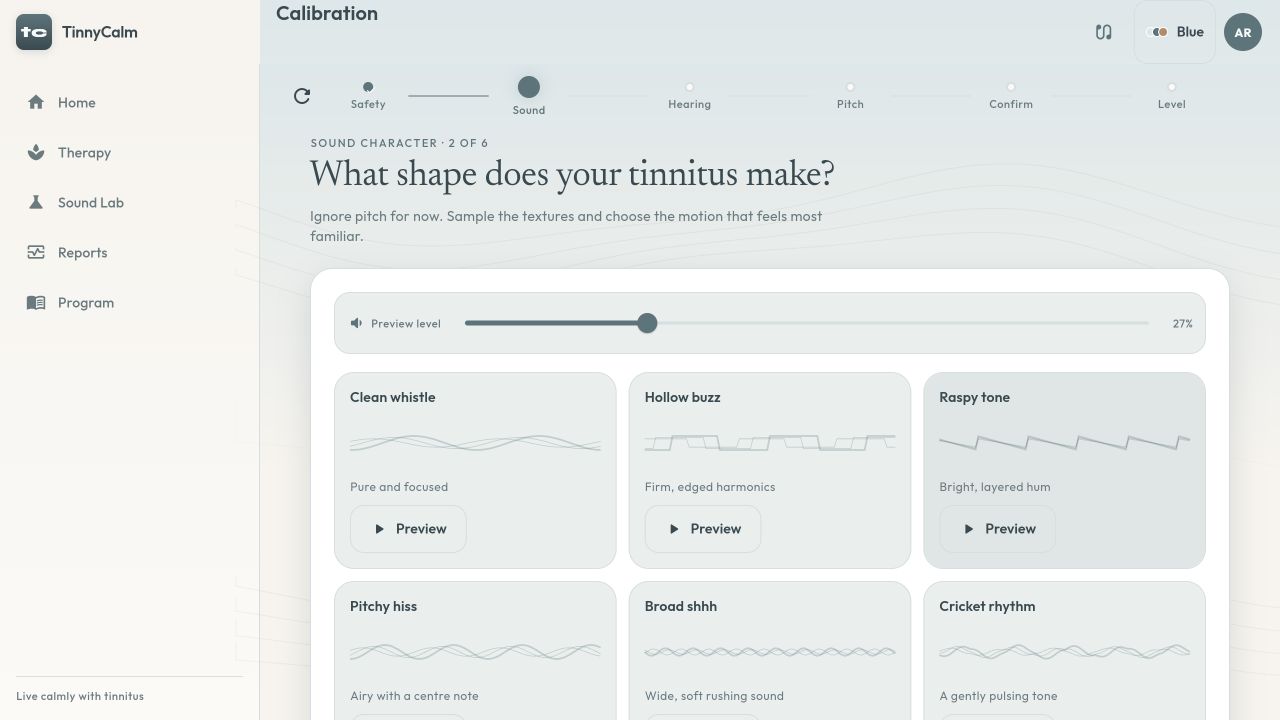
Preview familiar sound textures, then make simple comparisons at a comfortable level.
Your matched signal shapes the therapy tracks you can play, pause and return to later.

For many people it started somewhere loud.
The music ended. Something stayed.
And it followed them into every quiet room after.
One documented pathway
Tinnitus is not imaginary. One proposed mechanism is that reduced input in part of the hearing system changes how nearby neurons respond. Tinnitus has different causes, so this chapter is an explanation—not a diagnosis.

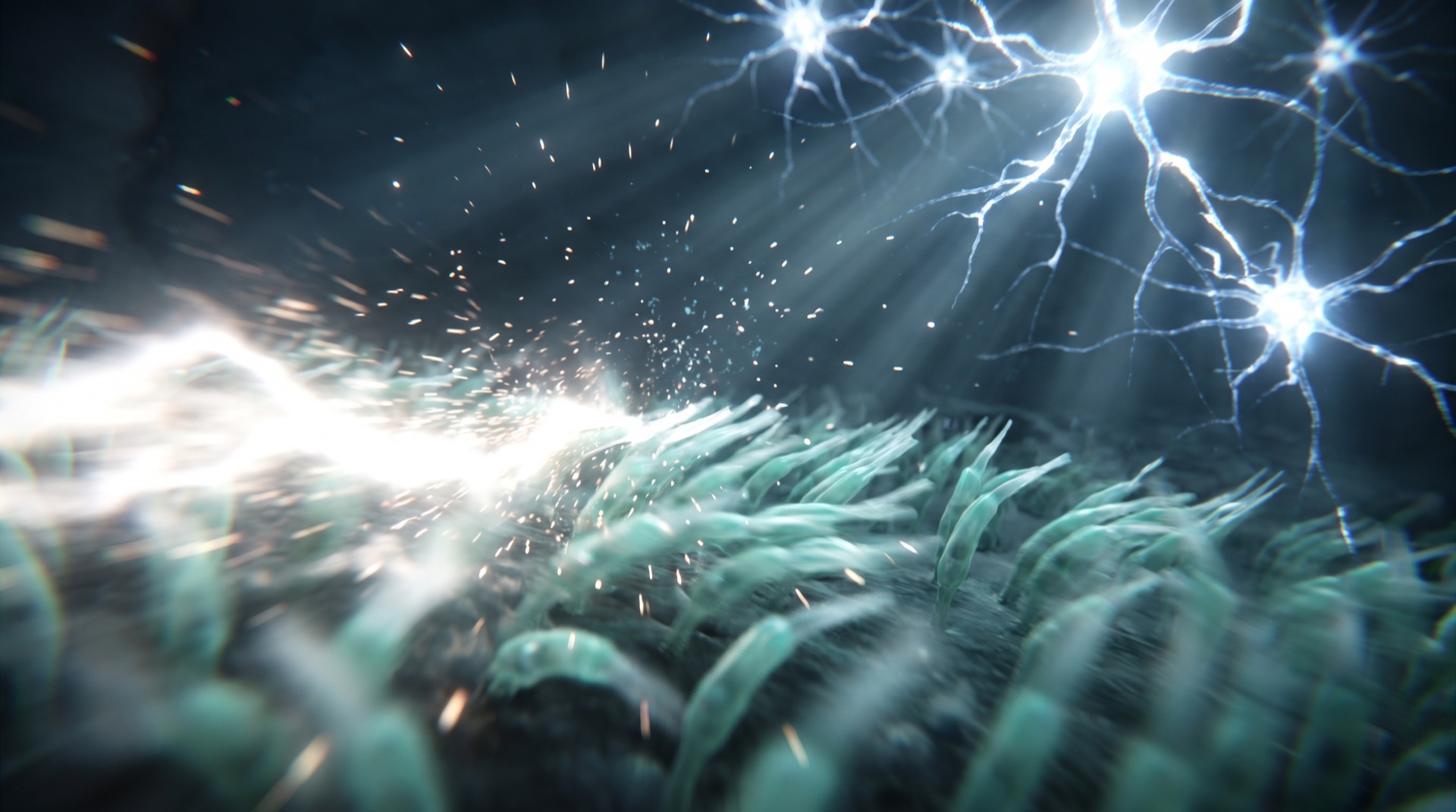

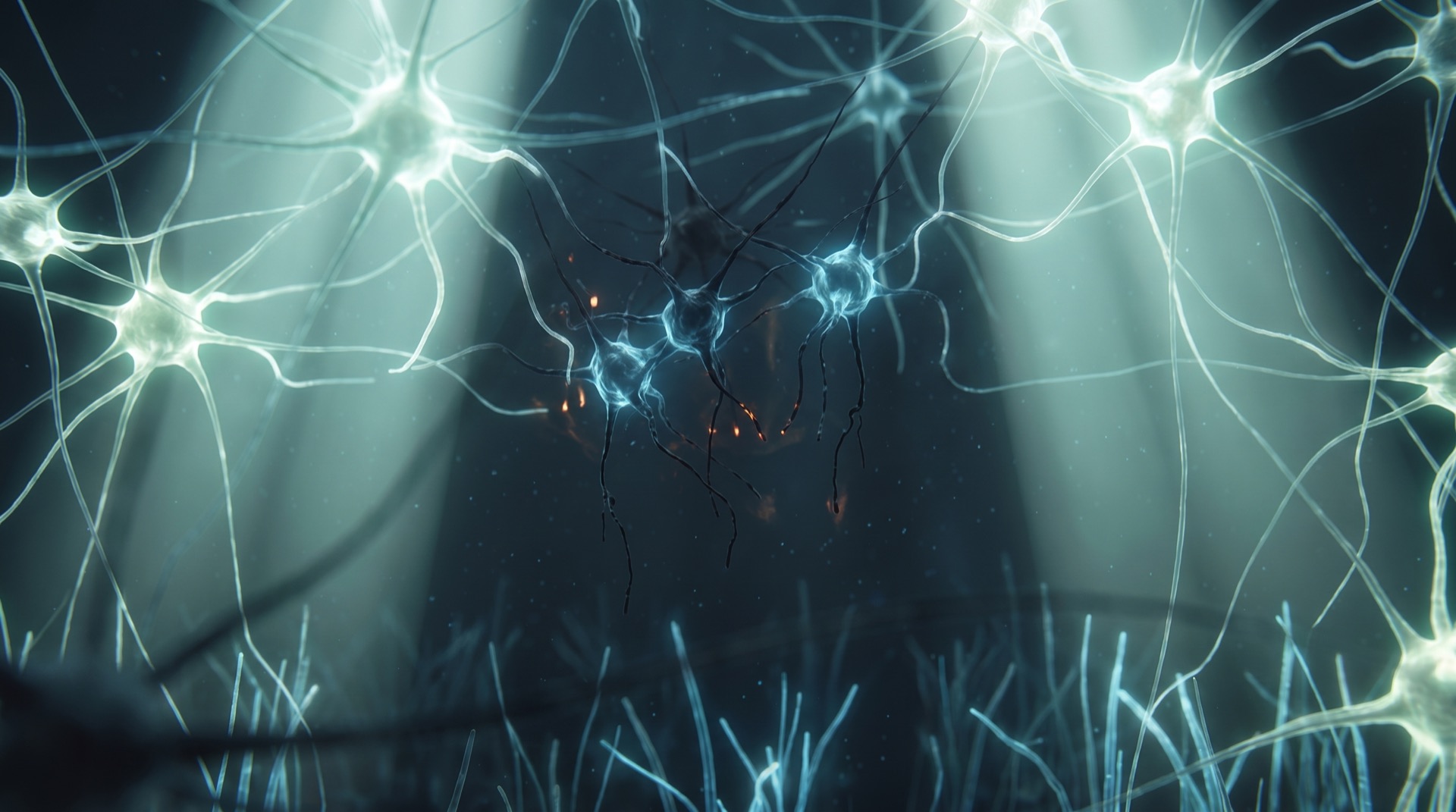
Healthy hearingEvery frequency you can hear has its own row of hair cells, and its own patch of neurons waiting above for their signal.
Something too loudA concert, a machine, a single blast. The pressure is more than the smallest cells can survive.
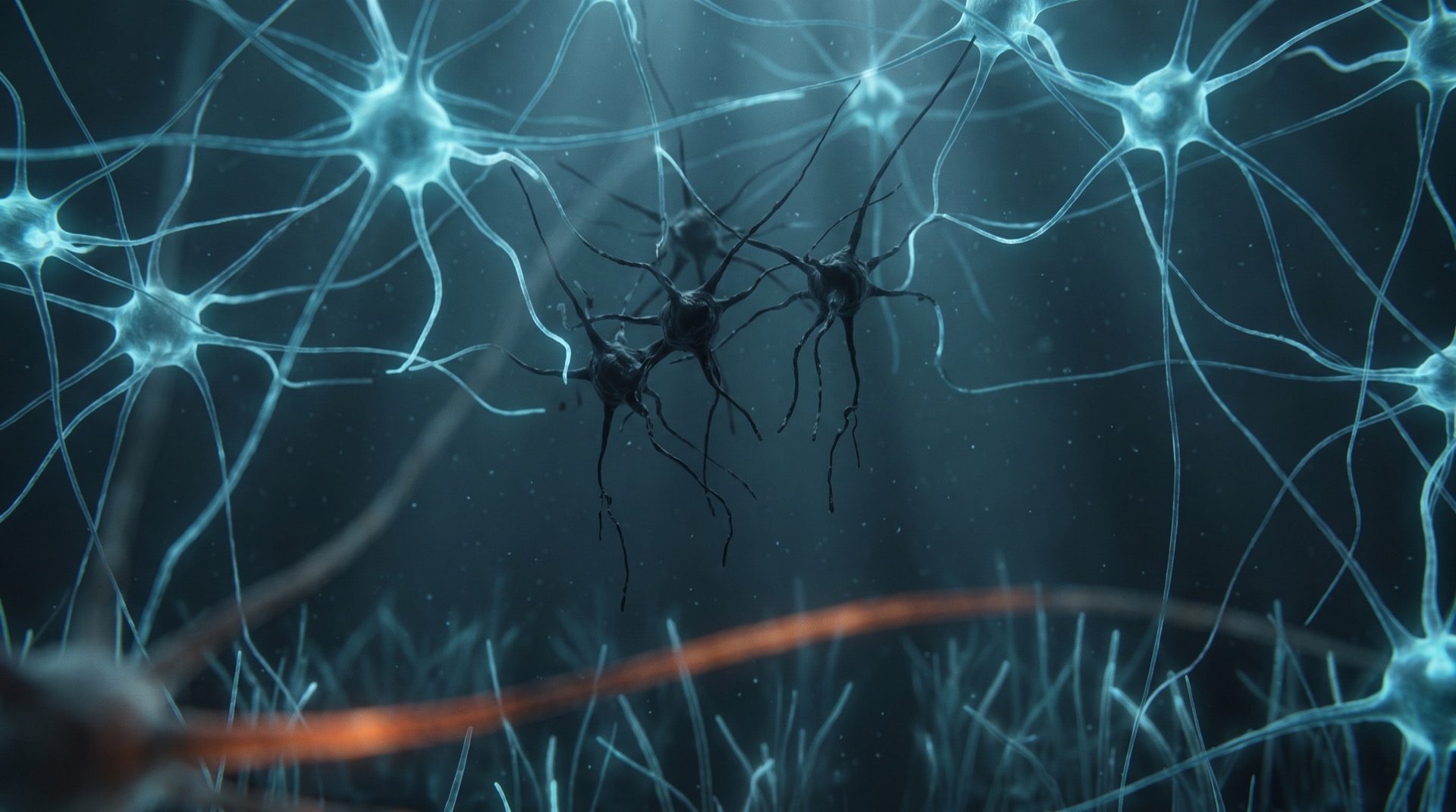
A scar in the fieldOne narrow band of hair cells is damaged. In this proposed pathway, that missing input can relate to the pitch a person hears.
Silence arrives aboveThe neurons tuned to that band stop receiving anything at all. A hole opens in your brain’s map of sound.
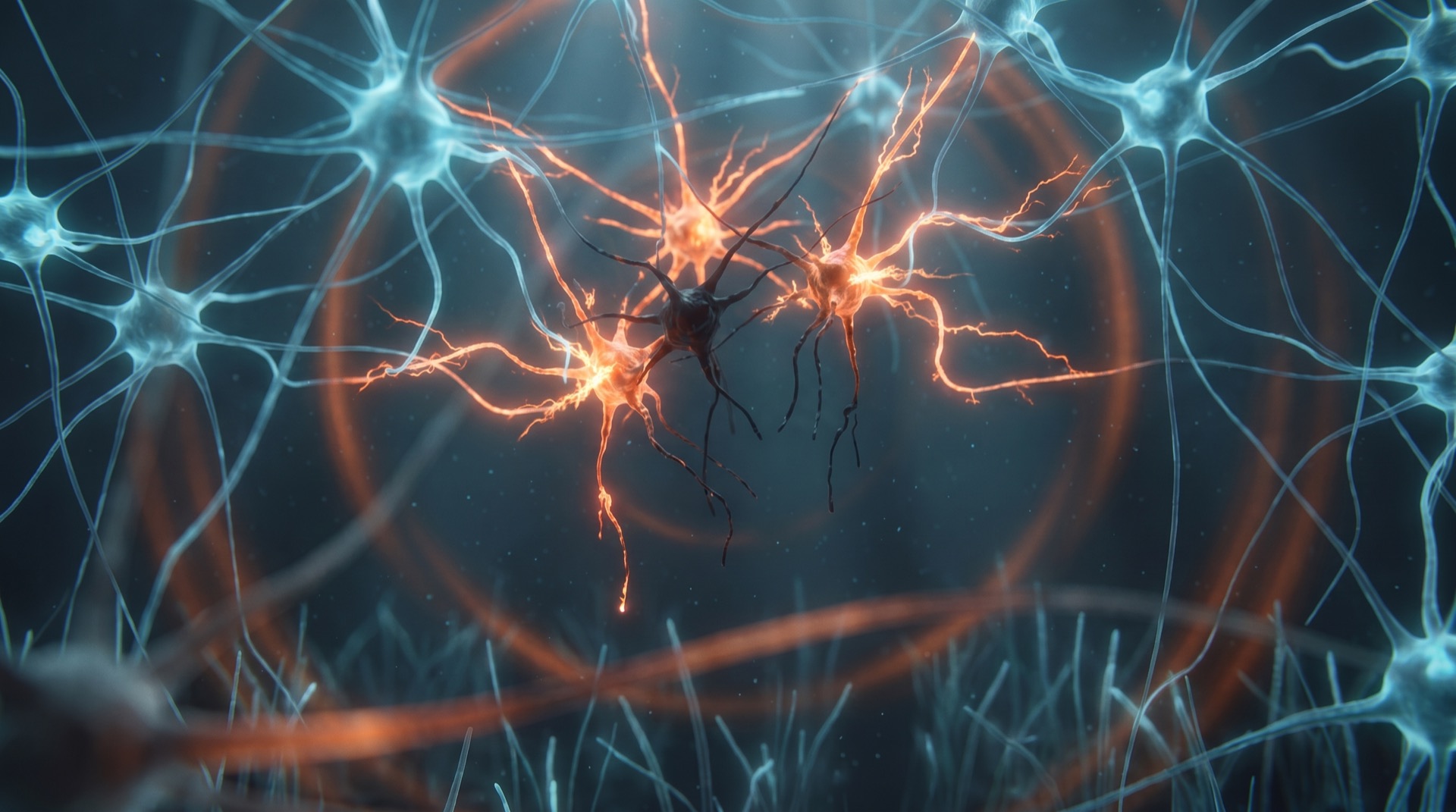
The edges catch fireThe system may reorganise around the reduced input. Nearby neurons can become overactive, and the brain may interpret that activity as sound.
Stimulating the edges backDFCRS lifts the two bands either side of the gap. The proposed mechanism is lateral inhibition: stimulating neighbouring neurons may reduce activity in the overactive region.
The same thing, measured
The same four moments, plotted against pitch — because this is the map HearHush actually works with once your Ft is matched.
Loud noise, age or illness destroys the hair cells that respond to one narrow band of frequencies. They do not grow back.
The neurons tuned to that band stop receiving their signal — a gap opens in the map of your hearing.
The system rewires around the gap. The neurons beside it turn hyperactive and fire in synchronised bursts, triggering their neighbours in turn.
DFCRS lifts the bands either side. The proposed lateral-inhibition mechanism aims to reduce activity in the overactive region.
Visualisations are illustrative. The mechanism shown — hair-cell loss in one band, deafferentation, hyperactive synchronised firing in the neighbouring neurons, and lateral inhibition as the basis for band-modulated sound therapy — follows the account given in Tang, Wang & Sun, Sound & Vibration (2025).
So you tried to drown it out.
But white noise is just another noise.
A different approach
Instead of covering the sound, we work with the frequencies around it — using the audio you already choose to listen to.
Step one · find it
Published in Sound & Vibration in 2025, the three-alternative forced-choice method reaches your tinnitus pitch far faster than the traditional clinic approaches — and it is gentle enough to do from your sofa.
Played to your better ear, just above your hearing threshold, half a second each.
Not the right one — the closest one. That single choice discards most of the range.
Each round tightens the window until the tones sit a third of an octave apart.
An octave-confusion check confirms it, then loudness is matched the same way. Your Ft is saved.
Step two · tune it
DFCRS — digital frequency customized relieving sound. Two narrow bands either side of your matched pitch are raised by 5–10 dB inside music you actually like. The proposed mechanism is lateral inhibition: stimulating neighbouring neurons may reduce activity in the overactive region.
The sound closest to yours
Left untouched. It is the reference point everything else is calculated from.
Just below your pitch
A third-octave band below your sound, lifted so those neurons get stimulated.
Just above your pitch
A matching band above your sound, lifted by the same amount.
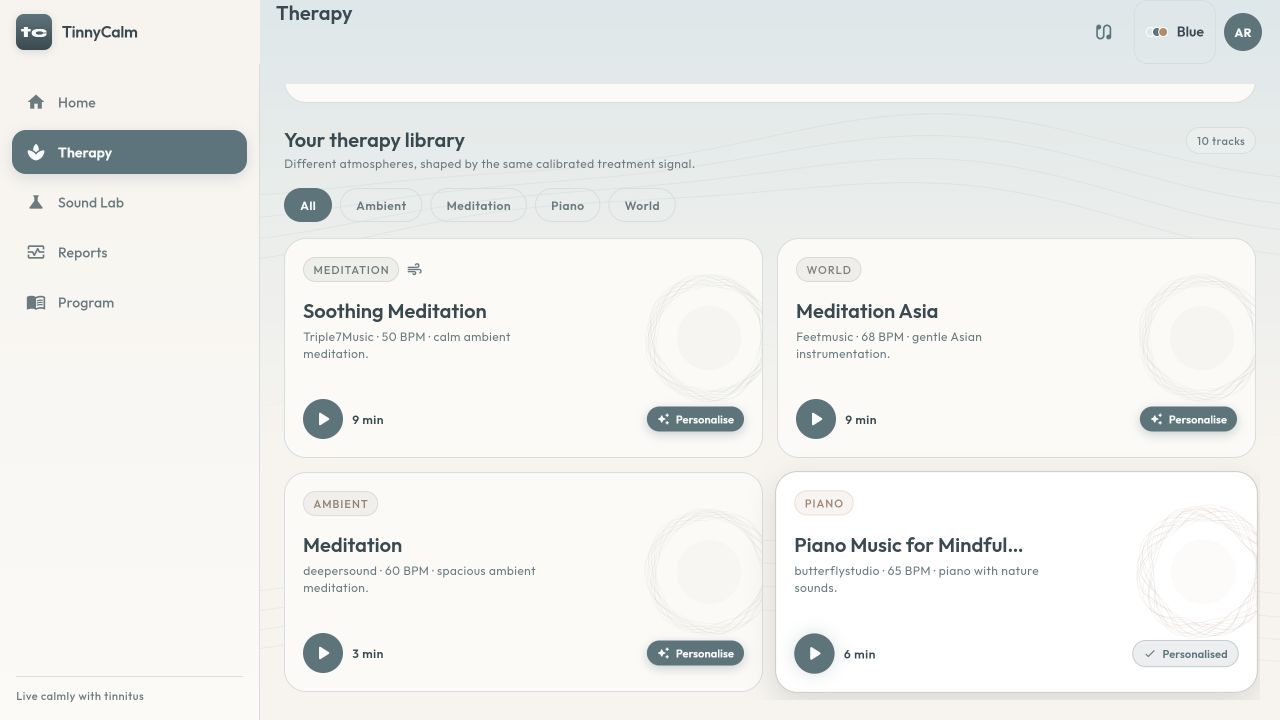
Your calibrated listening space
Preview a track, see its duration, or prepare a version shaped around your calibration. The player keeps pause, progress and skip controls visible while you listen.
What the 2025 study found
A randomised study of 32 participants reported greater improvements in tinnitus impact, insomnia, perceived loudness, anxiety and depressive symptoms with DFCRS than with unmodified music. These are study results for the method, not a clinical trial of HearHush or a guaranteed individual outcome.
Reported change from baseline
How to read these resultsApproximate values are read from the paper’s Figure 5 because exact means were not tabulated.
What remains uncertainOnly 32 participants, self-reported outcomes, three months of follow-up. Larger independent studies are still needed.
Step three · retrain the reaction
×
Hashir International Institute
The sound is one half of tinnitus. What your brain does about it is the other.
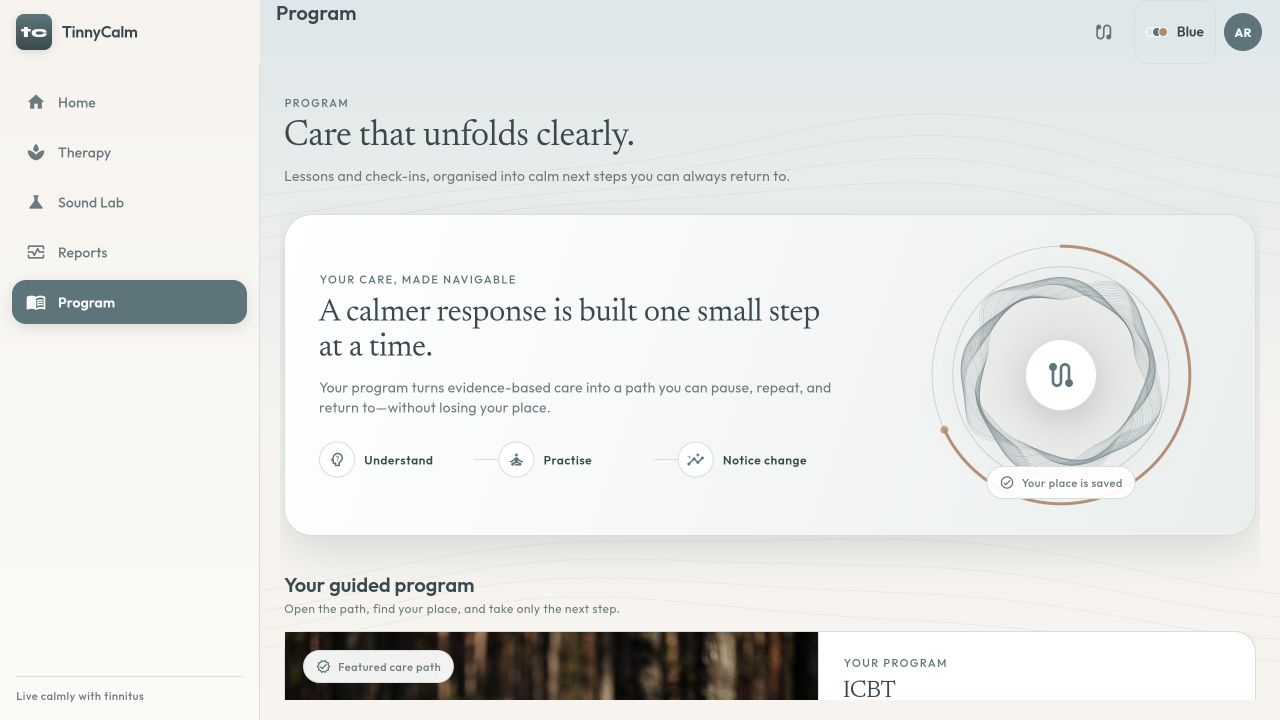
Clinical structure, calmer delivery
Understand what is happening, practise one skill, and return when you are ready. The programme makes the path visible without turning care into another task to keep up with.
Included with CareA complete structured iCBT pathway
Dr Hashir Aazh’s programme comes from a decade of audiologist-delivered CBT in NHS and private clinics. It works on the loop between the sound, your attention, the alarm it sets off, and your sleep — so the ringing stops commanding the room even on the days it is loud.

And for the moments you need relief now · Sound Lab
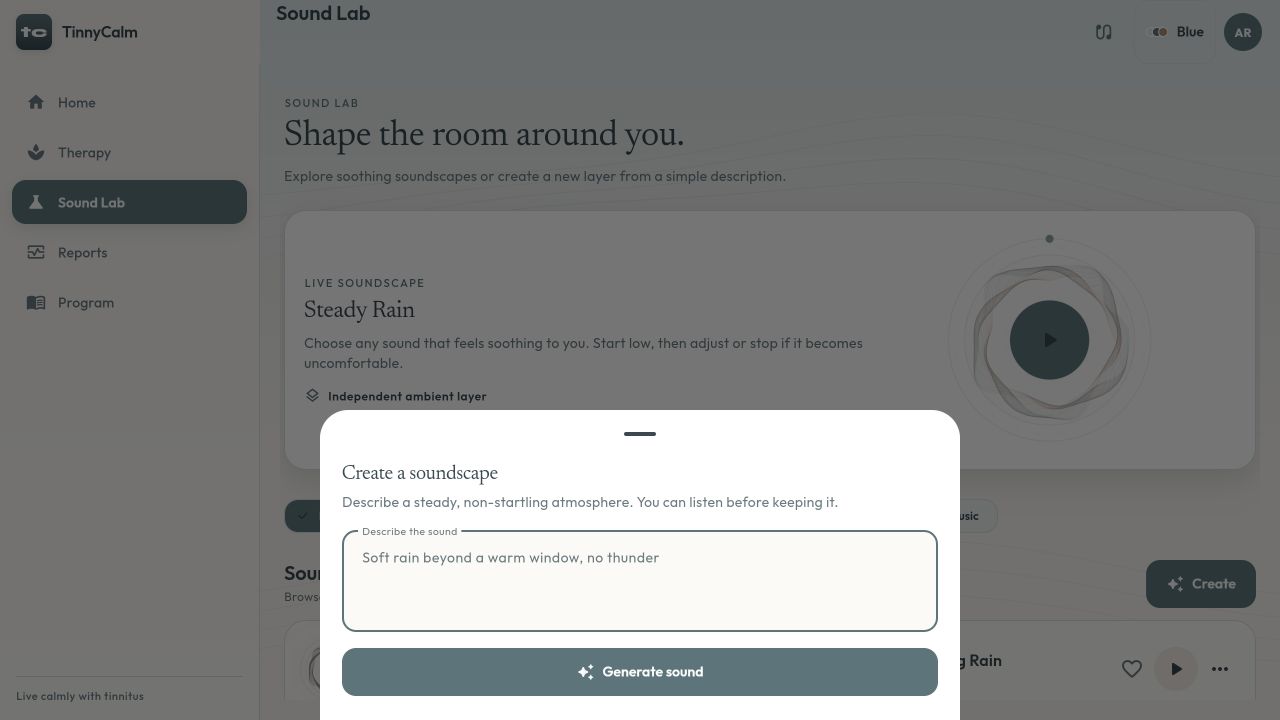
Any place, memory or feeling — typed in plain language, turned into a real, layered soundscape you can adjust or stop at any moment.
Clear access, no guessing
Use HearHush in your browser. Your account keeps your calibration and progress together so you can return without starting over.
A safe way to understand HearHush.
Complete care pathway
The complete structured programme licensed from Hashir Institute.
Keep your tools and routines after Care.
HearHush supports self-management and does not replace medical care. Your clinician’s advice always takes priority.
Before you begin
Headphones are recommended for calibration and personal therapy because they keep left and right comparisons accurate. Sound Lab can also be used as a gentle ambient layer without headphones.
You choose the preview level and stay in control of playback. Start low, pause or stop whenever a sound feels uncomfortable, and follow your clinician’s advice.
That is expected. You only choose what feels closest. HearHush narrows the comparison over several small steps, and you can restart or recalibrate later.
The first calibration takes about 5–10 minutes. The therapy protocol builds toward 120 minutes of listening a day, while guided CBT activities are paced across the week. Start gently; medical advice takes priority.
No. HearHush is self-management support. It helps you describe your tinnitus, organise personal audio and practise useful skills, but it does not diagnose, cure or replace professional care.
Your account saves your calibration profile, listening progress and programme position so you can continue across sessions instead of starting over.
Seek prompt medical advice for sudden tinnitus, sudden hearing loss, tinnitus that follows your heartbeat, rapidly changing symptoms or tinnitus on one side. See the full safety note below.
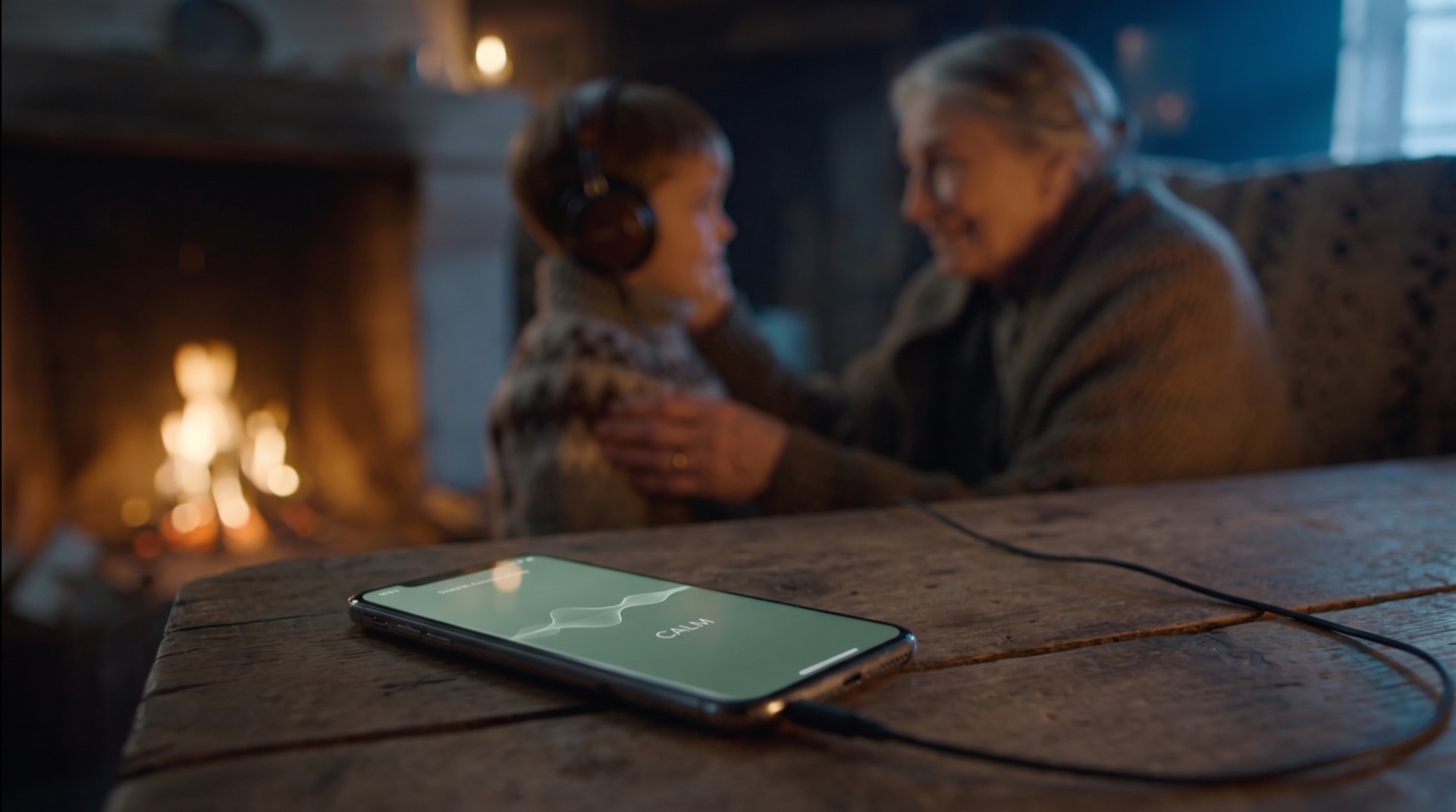
The ringing never fully left her.
It just stopped deciding her days.
One small step is enough for today